
Structures on the Temple Mount in Jerusalem serving as Israelite religious centers
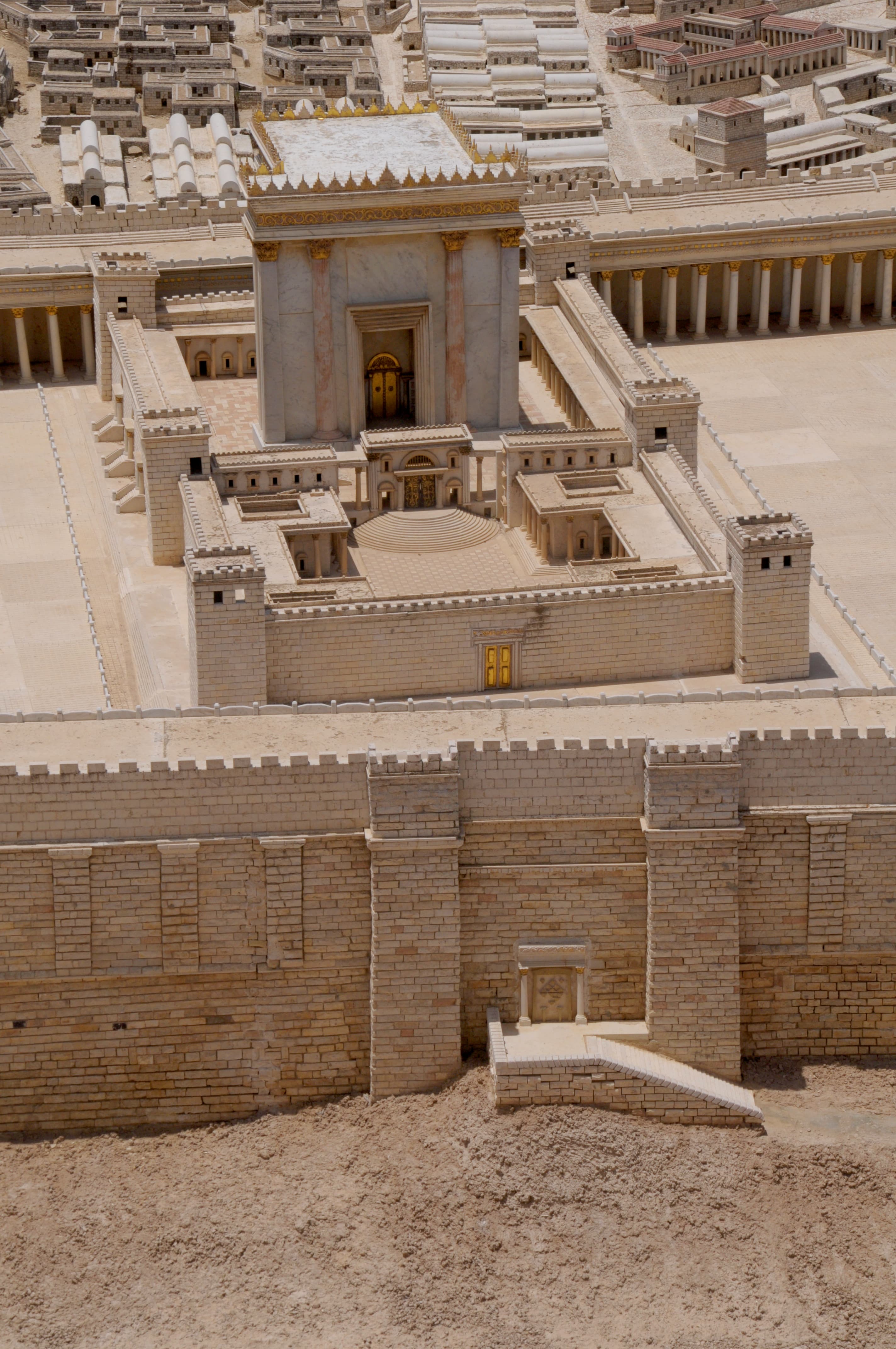
The Temple in Jerusalem, or alternatively the Holy Temple (Biblical Hebrew: בֵּית־הַמִּקְדָּשׁ, romanized: Bēṯ ham-Miqdāš; Arabic: بيت المقدس, Bayt al-Maqdis), refers to the two religious structures that served as the central places of worship for Israelites and Jews on the Temple Mount in the Old City of Jerusalem. According to the Hebrew Bible, the First Temple was built in the 10th century BCE, during the reign of Solomon over the United Kingdom of Israel. It stood until c. 587 BCE, when it was destroyed during the Babylonian siege of Jerusalem. The exact location of this temple on the temple mount is debatable. Almost a century later, the First Temple was replaced by the Second Temple, which was built after the Neo-Babylonian Empire was conquered by the Achaemenid Empire. While the Second Temple stood for a longer period of time than the First Temple, and was renovated by Herod the Great, it was destroyed during the Roman siege of Jerusalem in 70 CE. Projects to build the hypothetical "Third Temple" have not come to fruition in the modern era, though the Temple in Jerusalem still features prominently in Judaism. As an object of longing and a symbol of future redemption, the Temple has been commemorated in Jewish tradition through prayer, liturgical poetry, art, poetry, architecture, and other forms of expression. Outside of Judaism, the Temple, and today's Temple Mount, also carries a high level of significance in Islam and Christianity. The name Bait al-Maqdis which preserves the memory of the Temple, used later for islamic buildings on Temple mount and for entire Jerusalem city by Muslims. The site, known to Muslims as the "Al-Aqsa Mosque compound" or Haram al-Sharif, is considered the third-holiest site in Islam. According to the narrative in Islam, the Temple in Jerusalem was originally a mosque commissioned by Solomon and built by jinn on the commandment of Allah, with the purpose of serving as the qibla of the Israelites. In the early years of Islam, Prophet Muhammad and his followers faced Jerusalem for prayers until the city of Mecca (specifically its Kaaba) superseded the former as the new qibla.

