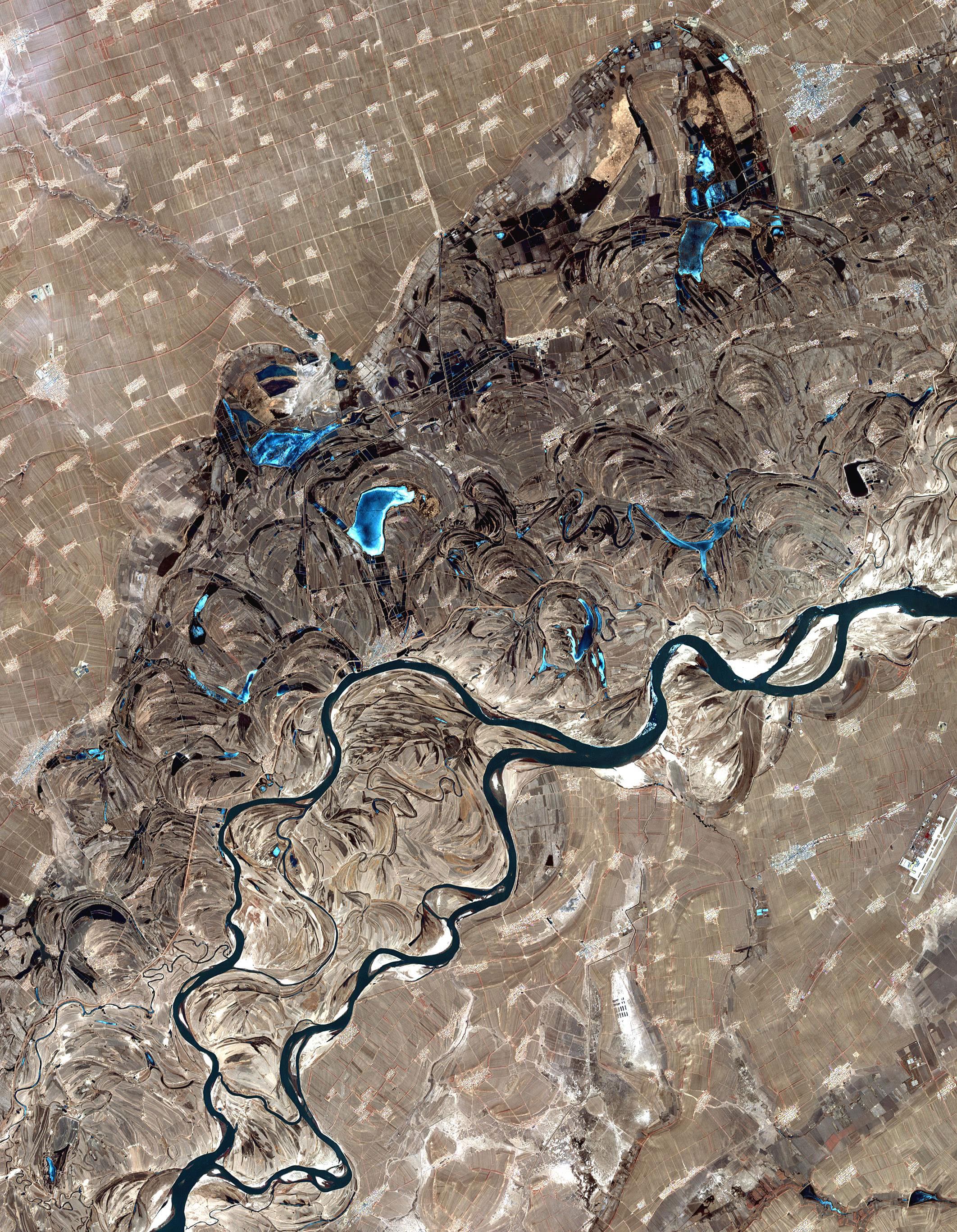
The Songhua or Sunghwa River (also Haixi or Xingal, Russian: Сунгари, romanized: Sungari) is one of the primary rivers of China, and the longest tributary of the Amur. It flows about 1,897 km (1,179 mi) from Changbai Mountains on the China–North Korea border through China's northeastern Jilin and Heilongjiang provinces. The river drains 557,180 km2 (215,130 mi2) of land, and has an annual discharge of 76.2 km3/a (2,410 m3/s) to 81.77 km3/a (2,591 m3/s). The extreme flatness of the Northeast China Plain has caused the river to meander over time, filling the wide plain with oxbow lakes, as remnants of the previous paths of the river.

