
river in Minas Gerais, Bahia, Pernambuco, Sergipe & Alagoas, Brazil
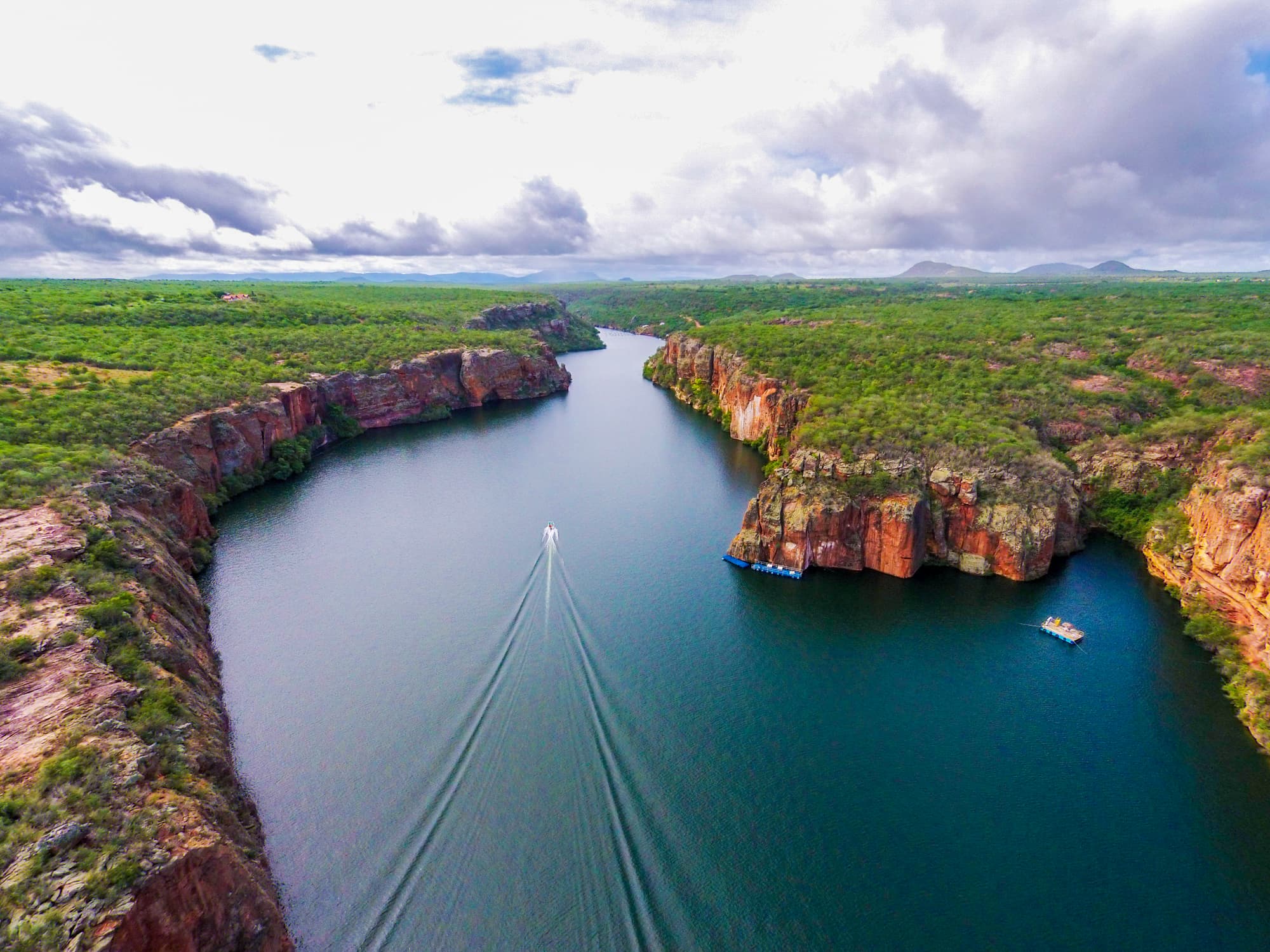
The São Francisco River (Portuguese: Rio São Francisco, pronounced [ˈʁiu sɐ̃w fɾɐ̃ˈsisku]), known in English as the San Francisco River, is a large river in Brazil. With a length of 2,914 kilometres (1,811 mi), it is the longest river that runs entirely in Brazilian territory, and the fourth longest in South America and overall in Brazil (after the Amazon, the Paraná and the Madeira). It is also locally known as the Velho Chico (pronounced [ˈvɛʎu ˈʃiku]; lit. 'Old Chico'), and was once known as the Opara by the Indigenous people before colonization. The São Francisco originates in the Canastra mountain range in the central-western part of the state of Minas Gerais. It runs generally north in the states of Minas Gerais and Bahia, behind the coastal range, draining an area of over 630,000 square kilometres (240,000 sq mi), before turning east to form the border between Bahia on the right bank and the states of Pernambuco and Alagoas on the left one. After that, it ends on the boundaries between the states of Alagoas and Sergipe and washes into the Atlantic Ocean. In addition to the five states which the São Francisco directly traverses or borders, its drainage basin also includes tributaries from the state of Goiás and the Federal District. It is an important river for Brazil, called "the river of national integration" because it unites diverse climates and regions of the country, in particular the Southeast with the Northeast. It is also significant because it passes through the semi-arid region of the country, a region historically characterized by droughts and low access to water. It is navigable between the cities of Pirapora (Minas Gerais) and Juazeiro (Bahia), as well as between Piranhas (Alagoas) and the mouth on the ocean, but traditional passenger navigation has almost disappeared in recent years due to changes in the river flow (see below).
