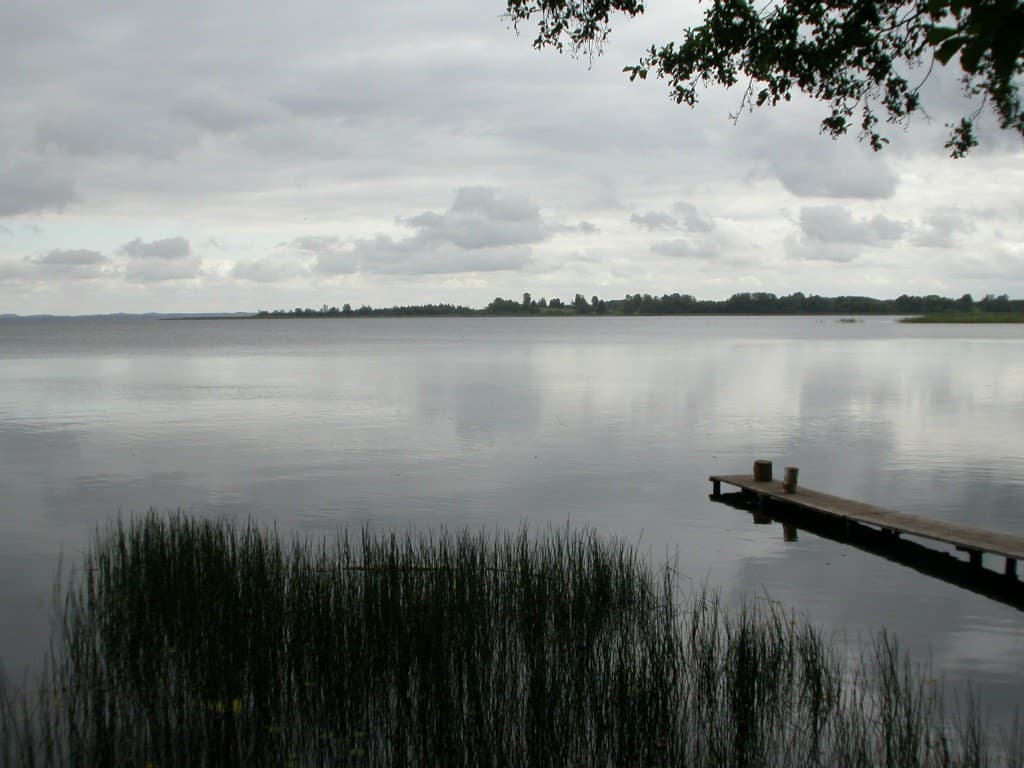
Rāzna National Park (Latvian: Rāznas nacionālais parks) is a national park in the Latgale region of Latvia. The park was established on 1 January 2007 in the Latgale Highlands of eastern Latvia to safeguard Lake Rāzna and its surrounding landscapes. Covering 532 km2, it is the youngest and second largest of Latvia’s four national parks, spanning parts of the Rezekne, Ludza and Krāslava districts across the Kaunata and Mākoņkalns municipalities. The park encompasses a resident population of roughly 5,000 people, most of whom live on privately owned land within its boundaries. The park's topography reflects its glacial origins, featuring rolling hills, moraine ridges and over twenty lakes. Lake Rāzna itself is the country's second largest by surface area (57.6 km2) and largest by volume (0.405 km3), feeding the headwaters of the Rēzekne River. Surrounding habitats form a mosaic of mixed deciduous and coniferous forest, wetlands, grasslands and agricultural land, all set within a hilly relief shaped by ice-age processes some 16,000 years ago. Management within Rāzna National Park is divided into four zones: a core nature reserve (roughly 6 % of the area), a national park zone where low-intensity forestry and farming are permitted, a landscape protection zone preserving traditional land-use patterns, and a minimal-regulation zone that allows natural evolution of human-influenced areas. The park forms part of an EU-designated Important Bird Area, hosting more than 340 bird species—including great bittern (Botaurus stellaris) and several grebes—as well as mammals such as Eurasian beaver (Castor fiber), Eurasian otter (Lutra lutra) and grey wolf (Canis lupus).

