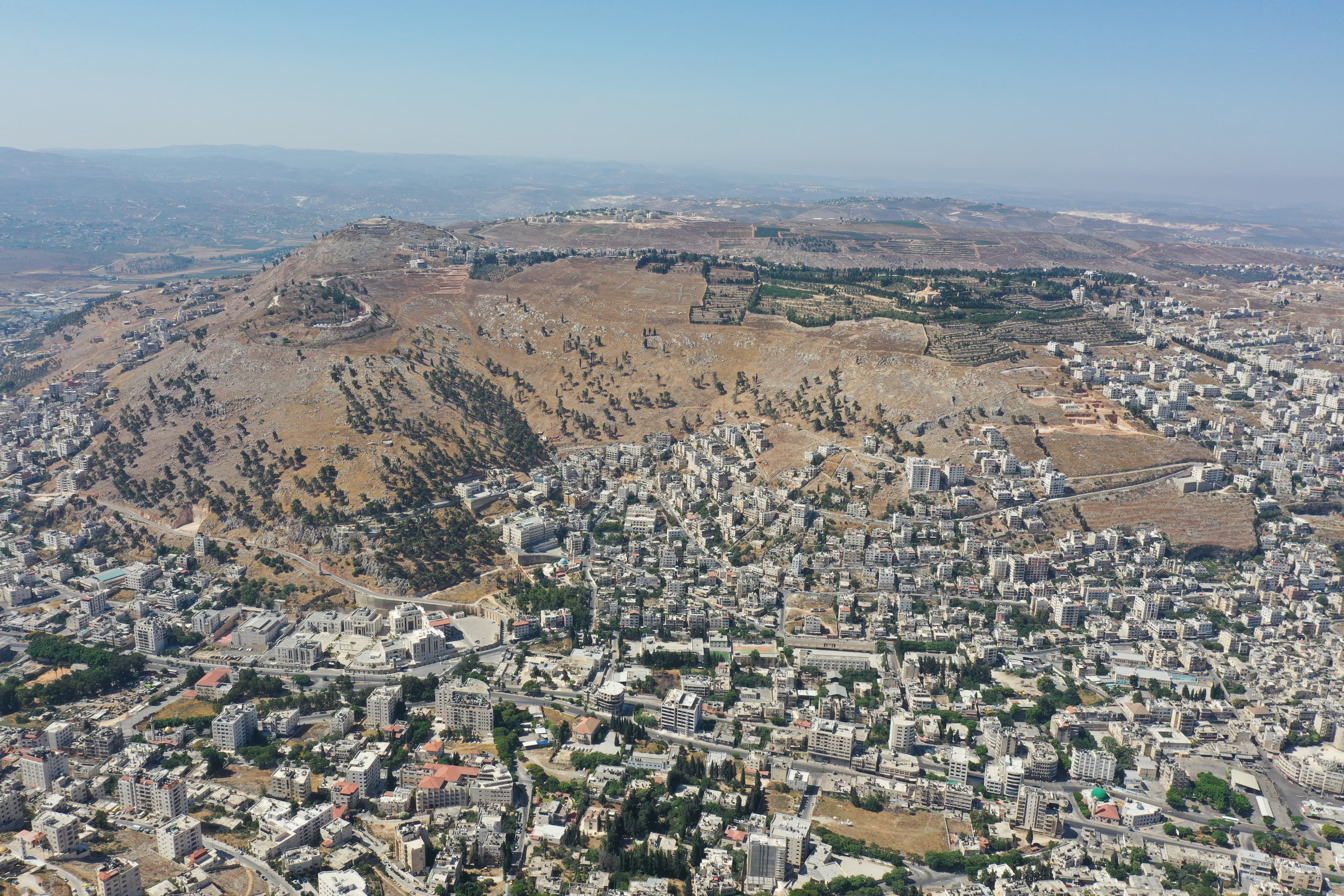
Mount Gerizim ( GHERR-iz-im; Samaritan Hebrew: ࠄࠟࠓࠬࠂࠟࠓࠩࠆࠝࠉࠌ, romanized: ʾĀ̊rgā̊rīzem; Hebrew: הַר גְּרִזִים, romanized: Har Gərīzīm; Arabic: جَبَل جَرِزِيم, romanized: Jabal Jarizīm, or جَبَلُ ٱلطُّورِ, Jabal at-Ṭūr) is one of two mountains near the Palestinian city of Nablus and the biblical city of Shechem, located in the north of Palestine’s West Bank. It forms the southern side of the valley in which Nablus is situated, the northern side being formed by Mount Ebal. The mountain is one of the highest peaks in the West Bank and rises to 881 m (2,890 ft) above sea level, 70 m (230 ft) lower than Mount Ebal. The mountain is particularly steep on the northern side, is sparsely covered at the top with shrubbery, and lower down there is a spring with a high yield of fresh water. The mountain is mentioned in the Hebrew Bible as the place where, upon first entering the Promised Land after the Exodus, the Israelites performed ceremonies of blessings, as they had been instructed by Moses. In Samaritan tradition, it is the oldest and most central mountain in the world, towering above the Great Flood and providing the first land for Noah’s disembarkation. Samaritans believe that Mount Gerizim is the location where Abraham almost sacrificed his son Isaac. Jews, on the other hand, consider the location of the near-sacrifice to be Mount Moriah. Samaritans regard Mount Gerizim, rather than Jerusalem's Temple Mount, as the location chosen by God for a holy temple. A Samaritan Temple was located on Mount Gerizim from the 5th century BCE until it was destroyed in the 2nd century BCE. Mount Gerizim continues to be the centre of Samaritan religion, and Samaritans ascend it three times a year: at Passover, Shavuot and Sukkot. The Samaritan village of Kiryat Luza and an Israeli settlement, Har Brakha, are situated on the ridge of Mount Gerizim. During the First Intifada in 1987, many Samaritan families relocated from Nablus to Mount Gerizim to avoid the violence. Today, about half of the remaining Samaritans live near Gerizim, mostly in the village of Kiryat Luza.

