
active volcano located on the peninsula of Kamchatka in Russia
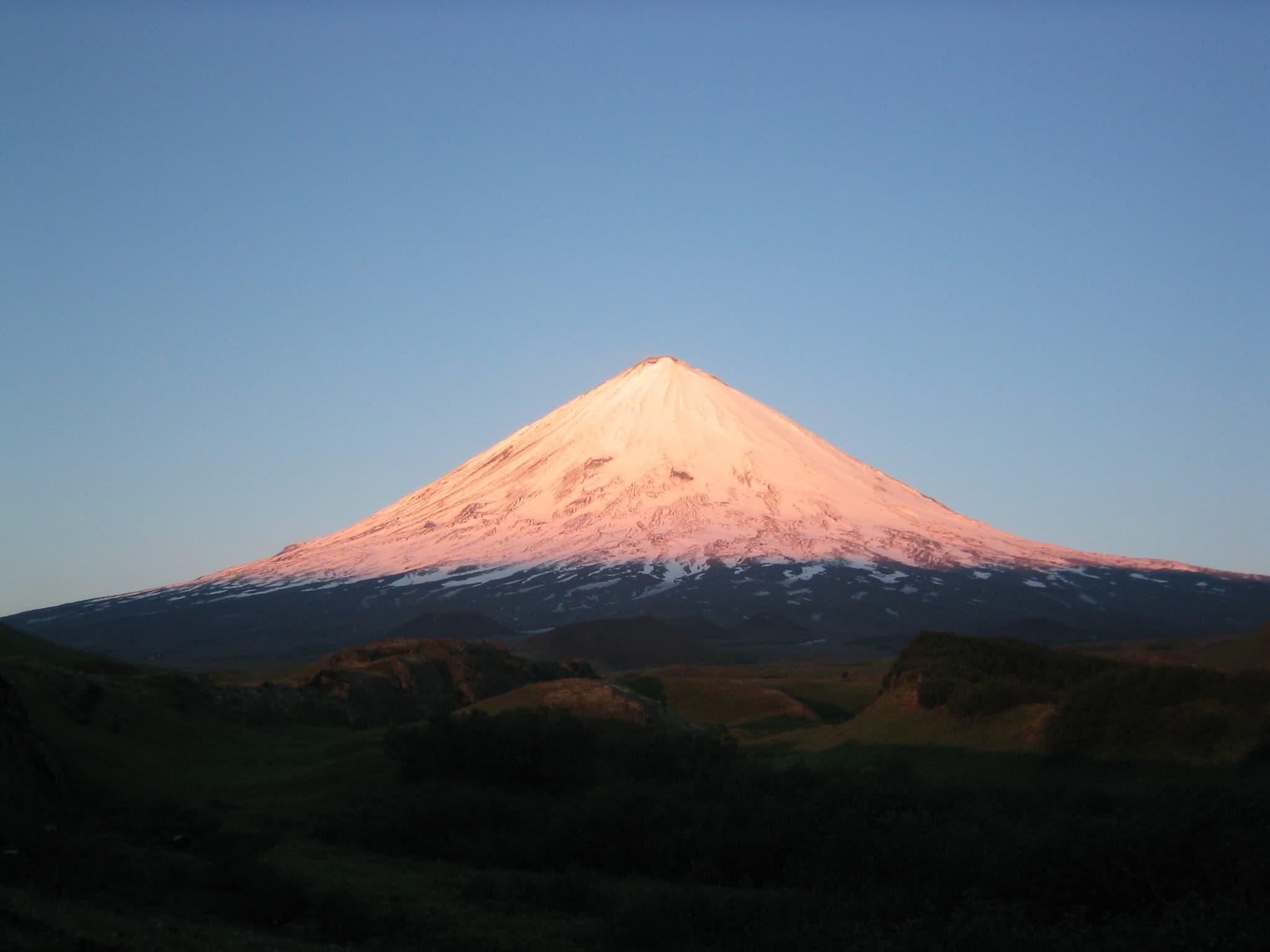
Klyuchevskaya Sopka (Russian: Ключевская сопка; also known as Klyuchevskoi, Russian: Ключевской) is an active stratovolcano, the highest mountain of Siberia and the highest active volcano of Eurasia. Its steep, symmetrical cone rises roughly 100 kilometres (60 mi) inland from the Bering Sea. The volcano is part of the Volcanoes of Kamchatka UNESCO World Heritage Site. Klyuchevskaya Sopka is ranked 15th in the world by topographic isolation. Klyuchevskaya appeared 7,000 years ago. Its first recorded eruption occurred in 1697, and it has been almost continuously active ever since, as have many of its neighboring volcanoes. It was first climbed in 1788 by Daniel Gauss and two other members of the Billings Expedition. No other ascents were recorded until 1931, when several climbers were killed by flying lava on the descent. As similar dangers still exist today, few ascents are made.
