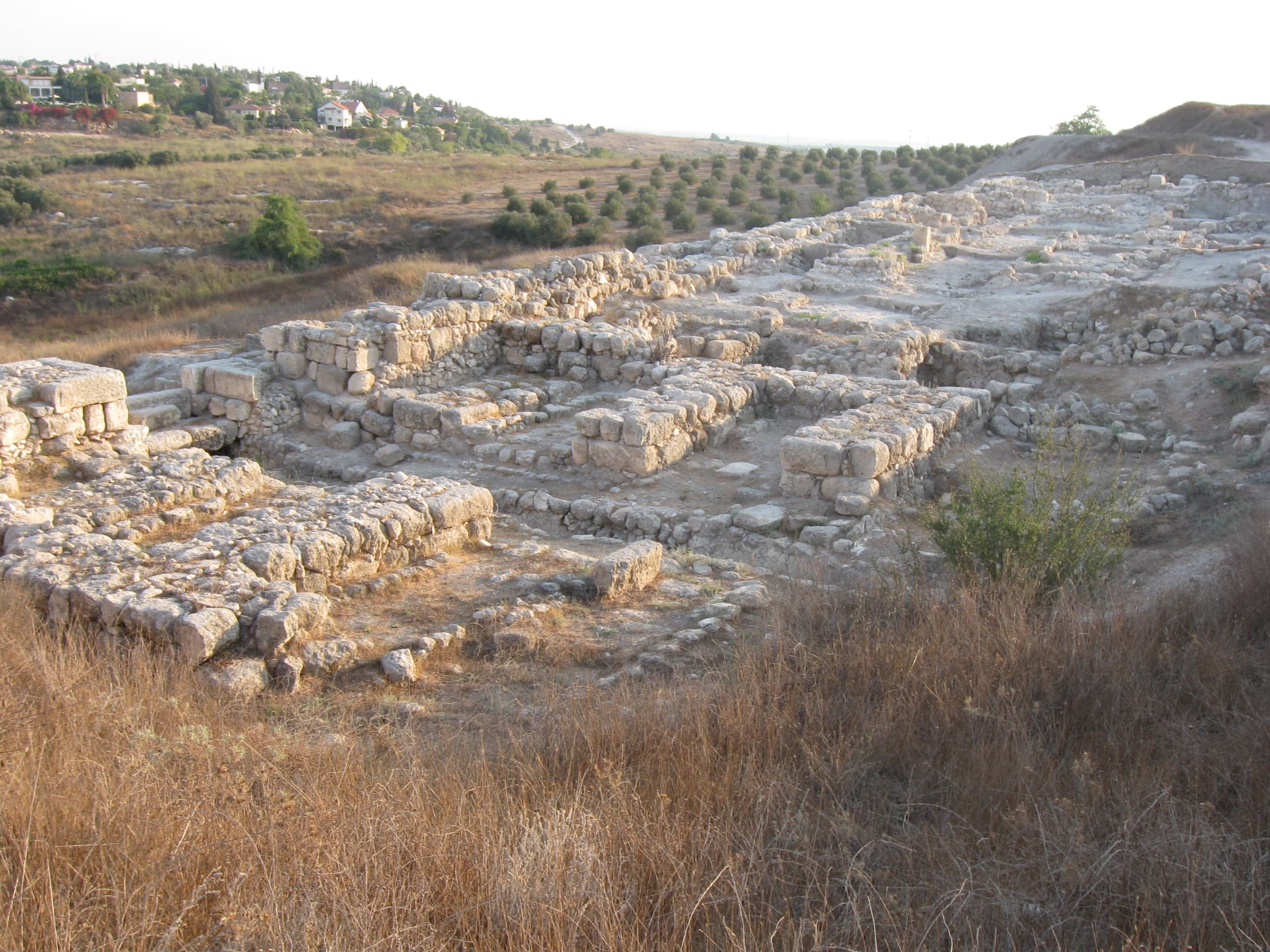
Gezer (Hebrew: גזר) is an archaeological site in the foothills of the Judaean Mountains at the border of the Shephelah roughly midway between Jerusalem and Tel Aviv in central Israel. It is now an Israeli national park. In the Hebrew Bible, Gezer is associated with Joshua and Solomon. Gezer rises to an elevation of 229 metres (751 ft) above sea-level, and affords a commanding prospect of the plains to the west, north, and east. Gezer became a major fortified Canaanite city-state in the first half of the 2nd millennium BCE. It was later destroyed by fire and rebuilt. It is first mentioned in several ancient Egyptian inscriptions. Its importance was due in part to the strategic position it held at the crossroads of the ancient coastal trade route linking Egypt with Syria, Anatolia and Mesopotamia, and the road to Jerusalem and Jericho, both important trade routes. In Roman and Byzantine times, the site was sparsely populated. Later, In the modern era, Gezer was the site of the depopulated Palestinian Arab village of Abu Shusha, the residents of which fled, and others were massacred by Givati Brigade during the 1948 Arab–Israeli War.

