Nazi concentration camp in Thuringia (1937–1945)
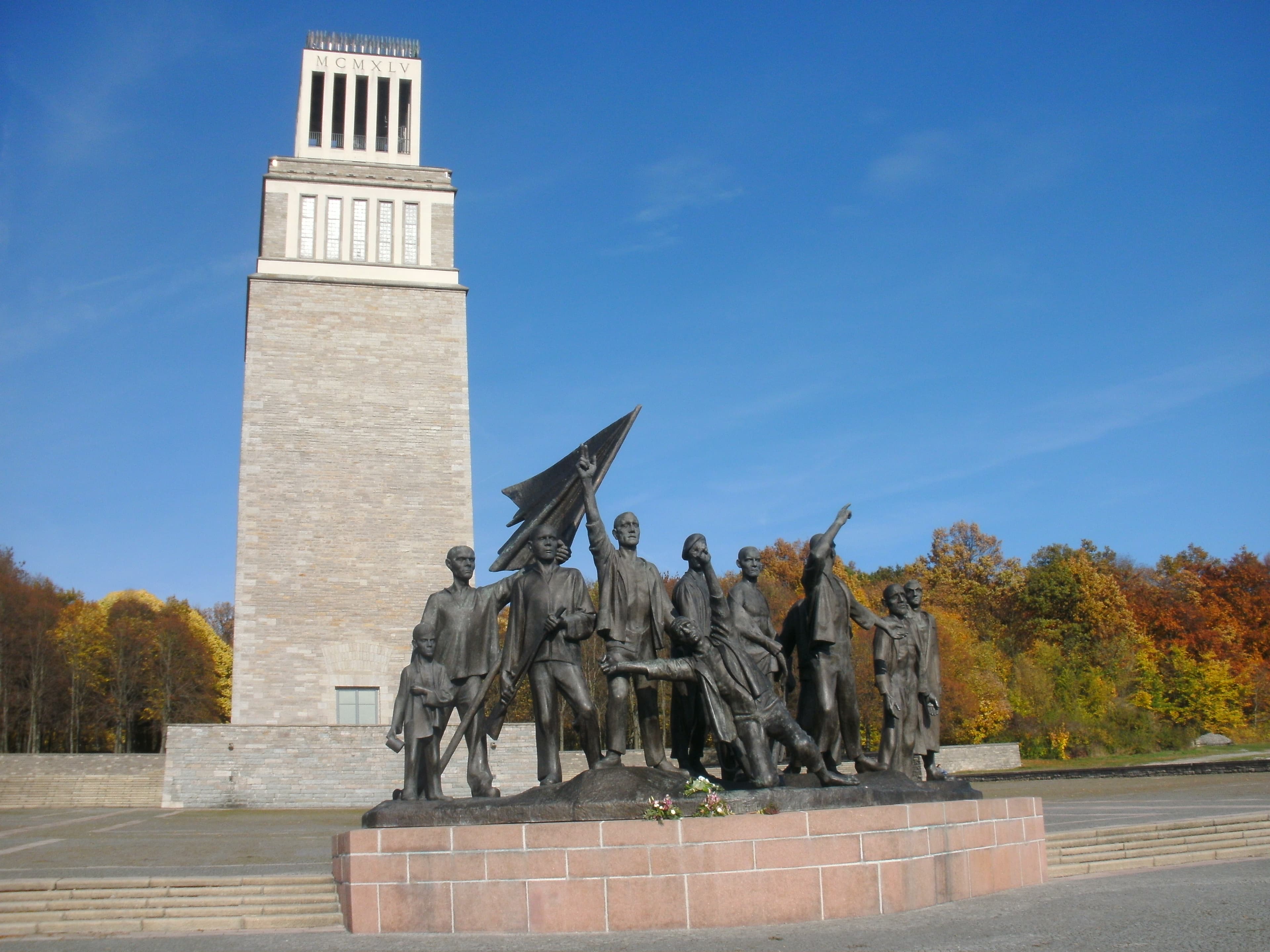
Buchenwald (German pronunciation: [ˈbuːxn̩valt]; 'beech forest') was a German Nazi concentration camp established on Ettersberg hill near Weimar, Germany, in July 1937. It was one of the first and the largest of the concentration camps within the Altreich (Old Reich) territories. Many actual or suspected communists were among the first internees. The Nazi camp prisoners came from all over Europe and the Soviet Union, and included Jews, Poles and other Slavs, Roma, the mentally ill and physically disabled, political prisoners, Freemasons, and prisoners of war. There were also ordinary criminals and those perceived as sexual deviants by the Nazi regime. All prisoners were primarily subjected to forced labor in local armaments factories. The insufficient food and poor conditions, as well as deliberate executions, led to 56,545 deaths at Buchenwald out of the 280,000 prisoners who passed through the camp and its 139 subcamps. The camp gained notoriety when it was liberated by the United States Army in April 1945; Allied commander Dwight D. Eisenhower visited one of its subcamps. From August 1945 to March 1950, the camp was used by the Soviet occupation authorities as an internment camp, NKVD special camp Nr. 2, where 28,455 prisoners were held, out of whom 7,127 died. The camp was then razed to hide this last episode. Today the remains of Buchenwald serve as a memorial and permanent exhibition and museum.
Buchenwald concentration camp is located in Weimar, Germany. Its specific geographic coordinates are latitude 51.0212 and longitude 11.2490.
The museum was established in 1937, making it a significant historical institution in the region.
Nazi concentration camp in Thuringia (1937–1945)... It is a key destination for those interested in culture and history in Germany.