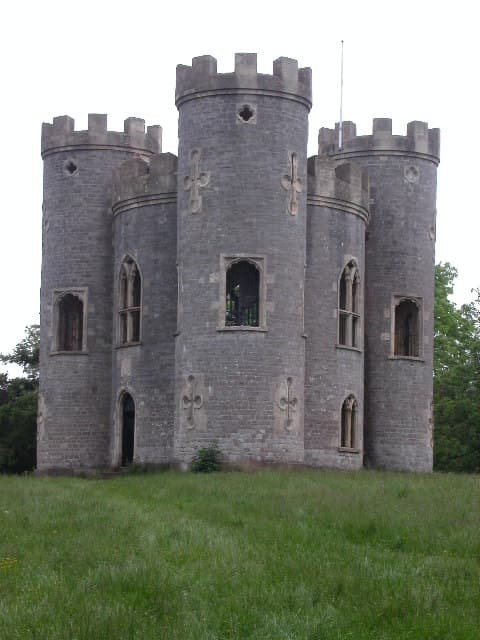
parkland surrounding Blaise Castle near Henbury in Bristol, England, UK
Blaise Castle Estate is a public park near Henbury in Bristol, England. The estate includes Blaise Castle House, a Grade II* listed 18th-century mansion house; Blaise Castle, a Grade II* listed folly built in 1766; and other listed ancillary buildings including an orangery and dairy. Along with Blaise Hamlet, a group of nine small cottages around a green built in 1811 for retired employees, and various subsidiary buildings, the parkland is listed Grade II* on the Register of Historic Parks and Gardens. The site has signs of occupation during the Neolithic, Bronze Age, Iron Age and Roman periods. After the Dissolution of the Monasteries the site was sold. In 1766 Thomas Farr commissioned Robert Mylne to build the sham castle in Gothic Revival style. After Farr's bankruptcy, the estate was sold several times until purchased by John Scandrett Harford, who demolished the previous dwelling in 1789 and built the Neoclassical Blaise Castle House. His son, also named John Scandrett Harford, continued with the development of the buildings and estate, which his family occupied until 1926. The park was laid out by Humphry Repton in the early 19th century. The estate is now owned by Bristol City Council. The house is run as a museum by the Bristol City Museum and Art Gallery and holds a variety of collections. The Picture Room, added in the 1830s, is hung with paintings, mostly of the 19th century. There are selections on display from Bristol Museum's 10,000 items of historic costume, and of toys from the 18th century to the 1980s.