
religious historical complex in Samarra, Iraq
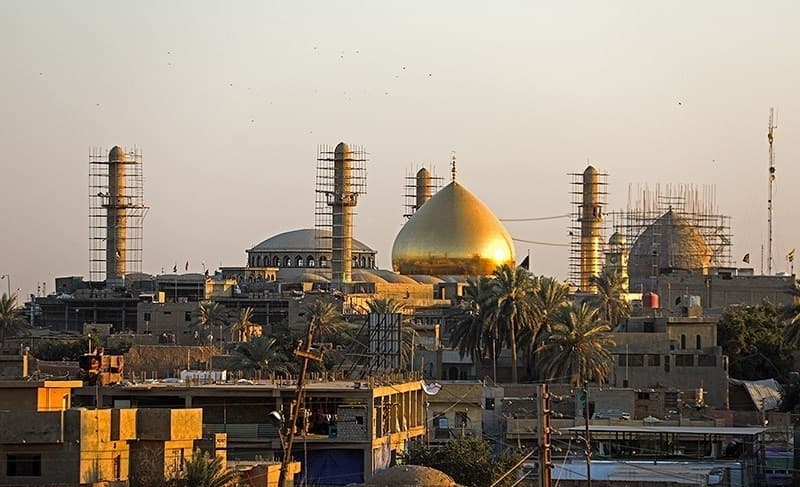
The Al-Askari Shrine (Arabic: مَرْقَد ٱلْإِمَامَيْن عَلِيّ ٱلْهَادِي وَٱلْحَسَن ٱلْعَسْكَرِيّ, romanized: Marqad al-ʾImāmayn ʿAlī al-Hādī wal-Ḥasan al-ʿAskarī, lit. 'Resting Place of the Two Imams Ali al-Hadi and Hasan al-Askari'), also known as the 'Askariyya Shrine and the Al-Askari Mosque, is a Twelver Shi'ite mosque and mausoleum, located in the city of Samarra, in the Saladin Governorate of Iraq. Built in 944 CE, it is one of the most important Shia shrines in the world. The dome was destroyed in a bombing by Sunni extremists in February 2006 and its two remaining minarets were destroyed in another bombing in June 2007, causing widespread anger among Shias and instigation of the Iraqi Civil War between the country's Shia and Sunni factions. The remaining clock tower was also destroyed in July 2007. The dome and minarets were repaired and the mosque reopened in April 2009. The 10th and 11th Shī'īte Imams, 'Alī al-Hādī ("an-Naqī") and his son Ḥasan al-'Askarī, known as al-'Askariyyayn ("the two 'Askarīs"), are buried in the shrine. Housed in the mosque are also the tombs of Ḥakīma Khātūn, sister of 'Alī al-Hādī; and Narjis Khātūn, the mother of Muḥammad al-Mahdī. Adjacent to the mosque is another domed commemorative building, the Serdab ("cistern"), built over the cistern where the Twelfth Imam, Muḥammad al-Mahdī, first entered the Minor Occultation or "hidden from the view"—whence the other title of the Mahdi, the Hidden Imam. The mosque is located within the 15,058-hectare (37,210-acre) Samarra Archaeological City UNESCO World Heritage Site, listed in 2007.
